






You may find that the bearings work well, but from time to time grease seeps from the seals. If there is more leakage, it may cause oil everywhere. There are many reasons for oil leakage. This article attempts to list some possible causes for your reference in diagnosis.
First, we would like to say that the discussion in this paper is limited to the proper operation of the bearings and does not discuss grease leakage due to deformation and damage of the ball and retainer or sealing problems.
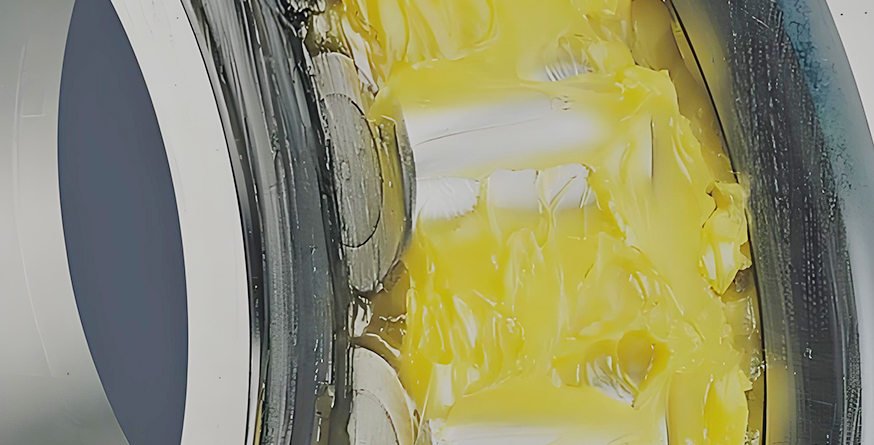
The first possible cause is excessive grease filling. The filling amount of bearing grease is generally 1/3-1/2. Of course, this depends on the type of bearing and the speed coefficient. Generally, we can select the bearing according to the manufacturer's filling amount (except for special requirements) without any problem. This can occur during bearing maintenance when excessive or excessive grease is added. The maintenance personnel hope to add more lubricating grease for longer service life. A grease leak will occur. However, with decreasing grease, leakage usually stops once the normal condition is reached.
The second reason is the pressure difference between the inside and outside of the bearing. There are various reasons for this pressure difference. For example, internal gas expansion due to high temperatures, blockage of exhaust and drain channels, strong convection of air on the bearing pedestal, or vacuum adsorption due to high speed rotation of the oil seal/inner ring too close to the plane. These factors need to be considered in the design process.
The third is high temperature. In addition to the above differential pressures, high temperatures soften the grease with increasing temperature. The softer or more fluid the grease, the greater the tendency for leakage. The bearing operating temperature is influenced by the ambient temperature, air flow, load, speed and operating time. These need to be considered in the analysis.
The fourth is the influence of external dynamic load. When external vibration and shock loads are transmitted to the bearing, the sealing lip and seal ring may momentarily separate, especially when the bearing is operating under internal hot pressure. This separation gives the opportunity for oil spills. In addition, when the shaft is fed or tilted against the bearing, the grease may alternately distort, causing a thixotropic flow of grease, which may result in leakage.
These are four possible causes of grease leakage from the bearings. I hope you can help us analyze the problem!