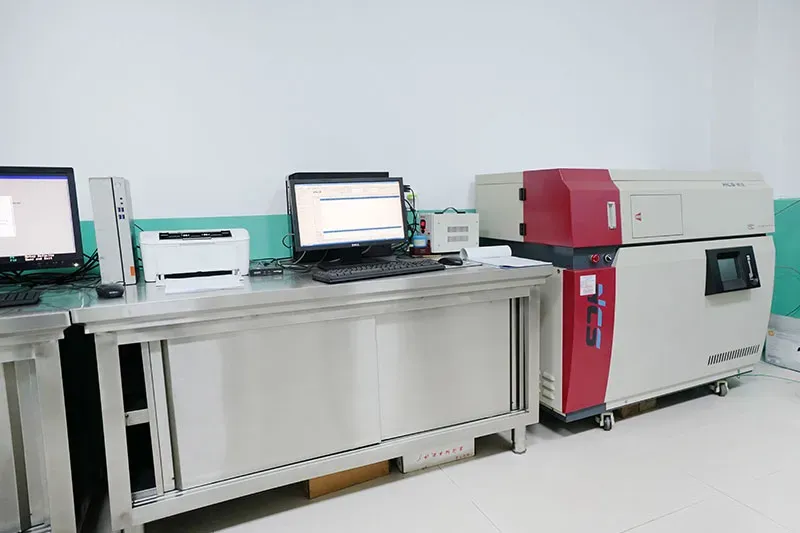







As the core supporting components of electric motors, bearings are responsible for guiding rotor rotation and withstanding operational loads. Their selection directly affects the motor's rotational speed, stability, energy consumption and service life. Motors with different power ratings and operating conditions are matched with suitable bearing types, and their specific application scenarios and corresponding technical characteristics are as follows:
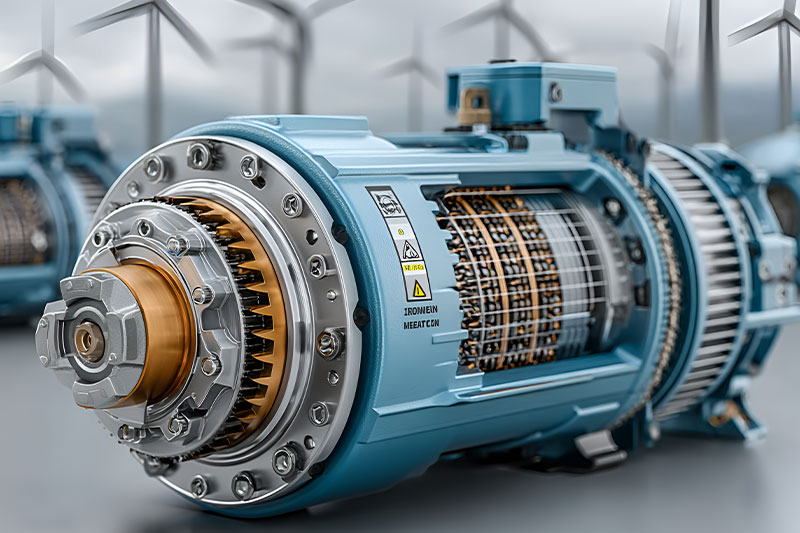
General Small and Medium-sized Motors: Balancing Cost-effectiveness and Versatility
Widely used in fans, water pumps, household appliances and other scenarios, these motors feature light loads, moderate rotational speeds, and balanced requirements for cost and stability, with deep groove ball bearings being the absolute mainstream choice. With a simple structure and low friction loss, they can withstand both radial loads and a certain amount of bidirectional axial loads, and are low in cost. Most of them are equipped with a double-sided rubber seal (2RS) structure to prevent dust intrusion and grease leakage, and the lithium-based grease filled at the factory can meet the maintenance-free requirements of the motor throughout its entire service life. For example, the commonly used YSJ series special motors for compressors extensively adopt deep groove ball bearings of models such as 6204-2E-C3 at the fan end and shaft extension end.
Large Heavy-duty Industrial Motors: Coping with High-intensity Loads
Equipment such as rolling mill motors and large water pump motors withstand extremely high radial loads during operation, and some also have problems of shaft deflection or misalignment during installation, making cylindrical roller bearings and spherical roller bearings the common choices. Cylindrical roller bearings, relying on the linear contact structure of multiple rows of rollers, can bear radial loads of tens of thousands of kN and are usually installed at the load end of the motor; spherical roller bearings can withstand extremely heavy radial loads and a certain amount of bidirectional axial loads, and their double-row spherical design allows a deflection angle of 1°-2.5°, which can automatically compensate for axial deviation, making them suitable for large motors with long and easily deformable shafts and avoiding bearing seizure caused by installation errors. In some working conditions, they are also matched with thrust bearings to cope with additional axial forces.
Special Motors for Specific Working Conditions: Adapting to Customized Requirements
Many special motors operate under harsh conditions and have special performance requirements for bearings, with specific applications as follows:
Traction motors: Traction motors for high-speed railways and freight electric locomotives need to withstand vibration and impact and require an ultra-long service life, usually adopting specially designed cylindrical roller bearings and deep groove ball bearings. With reinforced internal structures and special cage designs, these bearings have a calculated service life of more than 2 million kilometers, and some are also equipped with ceramic insulation layers to block damage to bearings caused by electric current. In the axle boxes of locomotives, tapered roller bearings with reinforced stamped metal cages are selected to cope with high loads generated by vibration and impact.
New energy vehicle motors: Pursuing miniaturization, lightweight design and high rotational speed, these motors require bearings to meet the demands of low energy consumption and fast response. Special bearings mostly adopt a compact structural design with high-temperature resistant materials, and at the same time reduce power loss through low-friction optimization, adapting to frequent start-stop and rotational speed fluctuations during vehicle driving.
Wind turbine generators: Cylindrical roller bearings and deep groove ball bearings are commonly used in the yaw and pitch system motors of wind turbine generators, which can not only withstand unstable impact forces caused by wind loads but also maintain high positioning accuracy to ensure the wind rotor stably captures wind energy. Some high-power wind turbines also adopt magnetic suspension bearings, which further improve energy efficiency by virtue of low-friction characteristics and reduce maintenance costs at the same time.
Industrial robot joint motors: These motors have extremely high requirements for precision and rigidity, with SKF's precision angular contact ball bearings and cross roller bearings being the common choices. Angular contact ball bearings can withstand large unidirectional axial loads and a certain amount of radial loads, and can bear bidirectional axial loads when used in paired sets. They improve rigidity through precise preloading to ensure the accurate movement of robot arms, adapting to the high-frequency and high-precision operation requirements.
Variable Frequency and High-speed Motors: Solving Special Operational Problems
High-frequency circulating currents are easily generated during the operation of variable frequency motors, which may breakdown the bearing raceways. Insulated coated bearings are often used in such scenarios, such as products with an oxide ceramic coating on the surface of the inner or outer ring, which can block voltages not higher than 1000V. For equipment such as high-speed turbine motors, active magnetic suspension bearings may be selected, which not only have a wide operating range and can start and stop frequently in extreme environments but also feature low noise and low power consumption. Combined with advanced control algorithms, they can still operate stably when the rotor is unbalanced.